NIR — Near Infrared
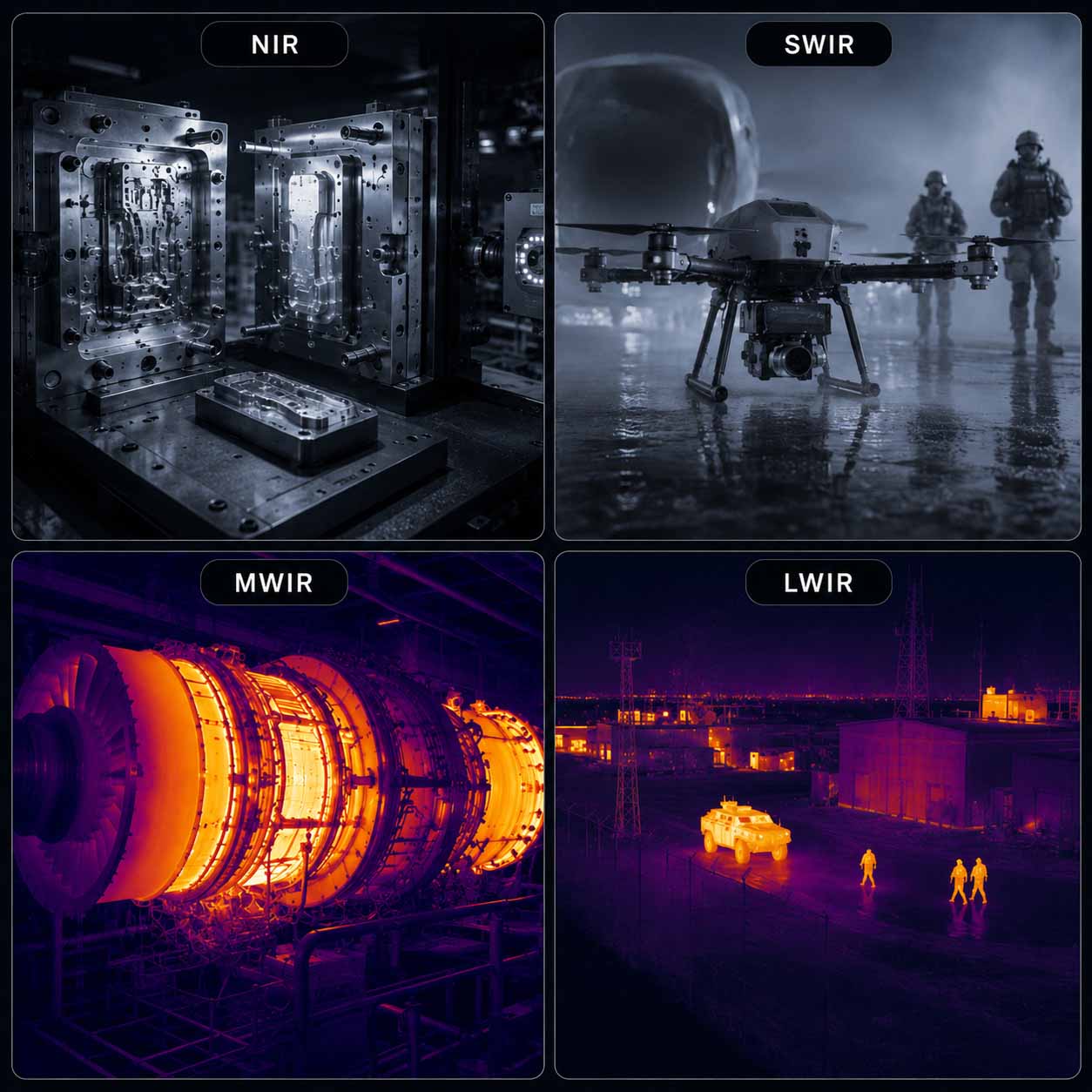
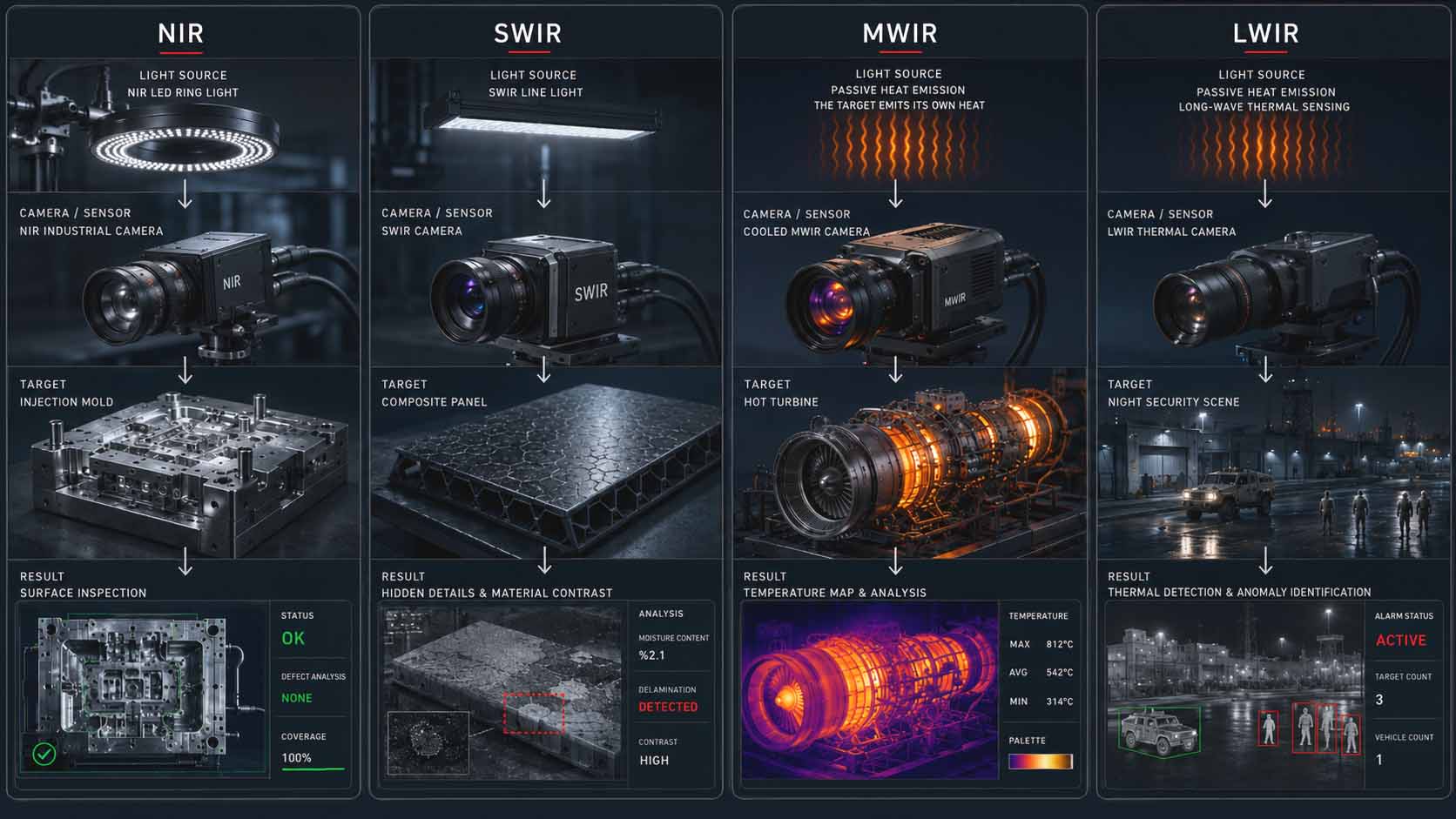
NIR is the infrared band closest to visible light. It is widely used for industrial machine vision, surface inspection, presence/absence checks, barcode and marking reading, and high-contrast imaging in low-light environments. In NIR systems, the scene is usually illuminated with dedicated infrared light and the camera analyzes the reflected signal to produce repeatable images that are less affected by ambient light.
SWIR — Short-Wave Infrared
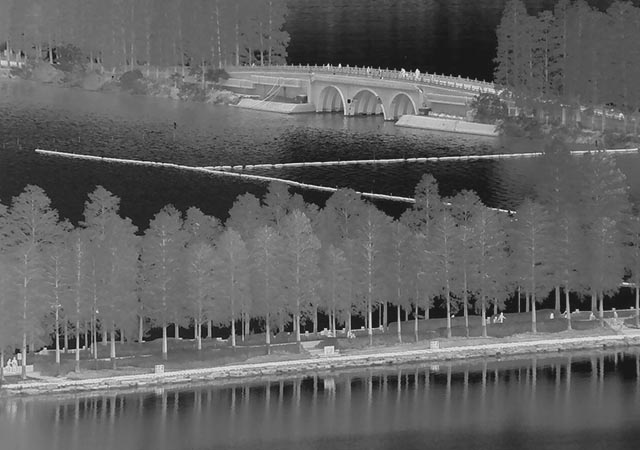
SWIR operates in a special region between visible light and thermal imaging. One of its biggest strengths is that some materials that look similar in visible light behave differently under SWIR. This makes it valuable for coating inspection, plastic/glass separation, moisture detection, semiconductor inspection, agricultural analysis, defense surveillance and imaging under low-visibility conditions.
MWIR — Mid-Wave Infrared
MWIR is a thermal imaging band mainly used for detecting hot targets and strong temperature differences. Engines, turbines, exhaust systems, hot metal surfaces, fire sources and hot targets in defense applications produce strong contrast in MWIR. These systems often rely on cooled detectors, which can provide higher sensitivity and detail at the cost of greater complexity and price.
LWIR — Long-Wave Infrared
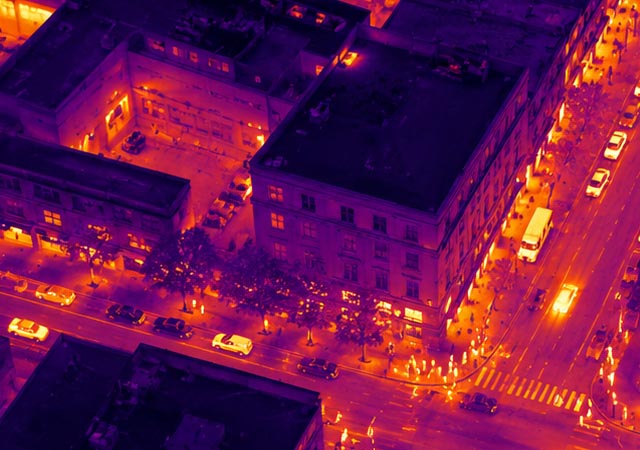
LWIR is the most widely used thermal imaging band for sensing the heat energy emitted by objects near ambient temperature. People, vehicles, buildings, electrical panels, machine bodies, pipelines and production equipment can all be visualized through their thermal signatures in LWIR. This is why it is common in night vision, perimeter security, border surveillance, fire detection, facility monitoring, maintenance and predictive fault analysis.